

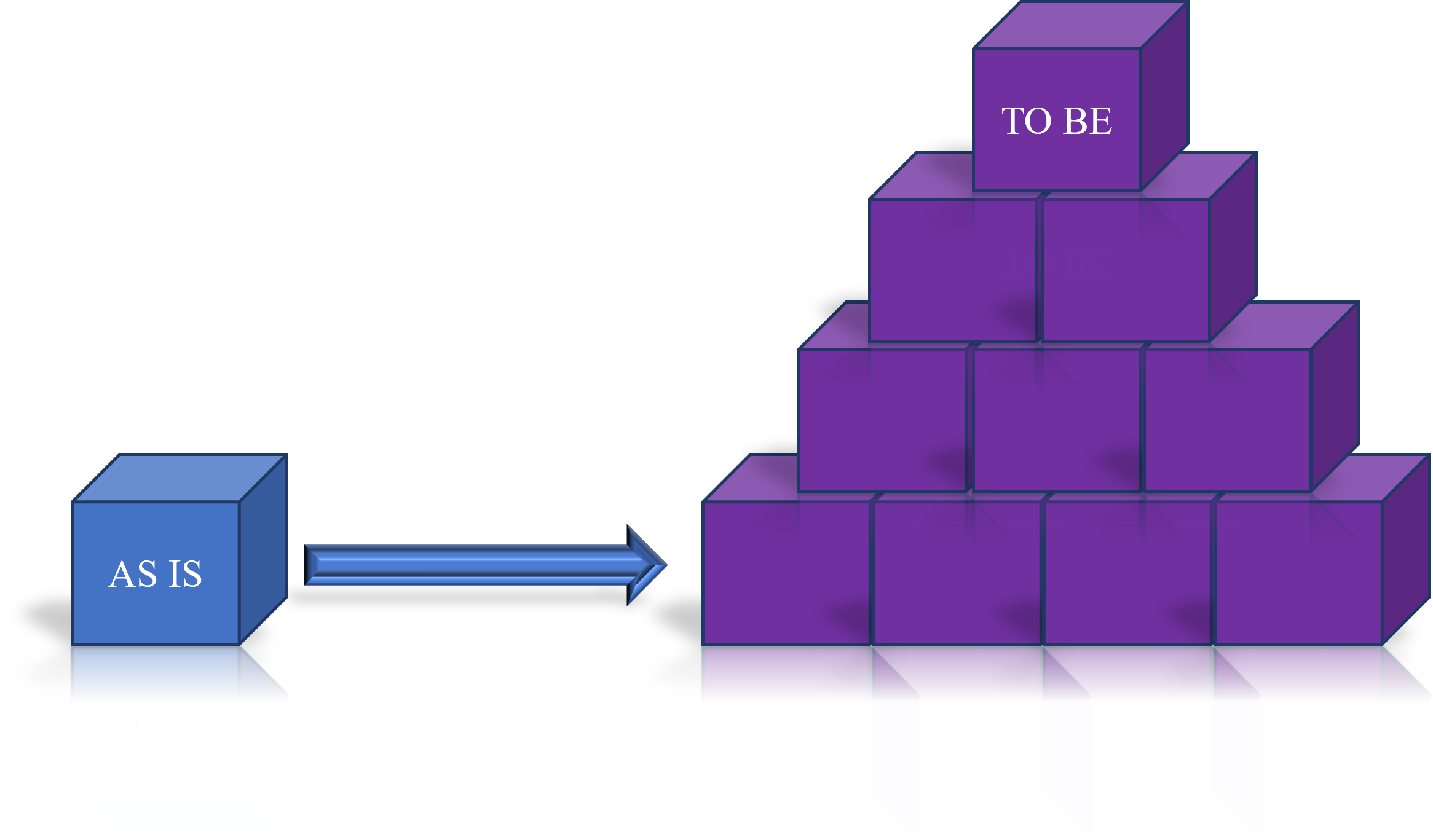
We assist our clients in accurately defining their current state in order to more precisely plot a path to improving performance, efficiency, and employee moral.
Effectively identifying weaknesses, dependencies, technical, legal, and business requirements early is essential to keeping development costs and times at a minimum.
Defining Your Current State
The Microsoft Office Suite provides a small scale platform for the iterative development of applications that function identically, if not better, than large scale applications such as Oracle. The Office environment provides the opportunity to define, in granular detail, how an office functions technically, administratively, operationally, and how its data is structured, shared, stored, and processed. This is the lowest cost environment for development of prototypes that satisfy the lowest scale of organizational development and where all organizations across all industries, with office functions involving computers running Microsoft Office, should focus on developing to become their most efficient and aware of self.
For a client to get the best results, the client needs to go through iterations of self-development through continuous self-analysis, trial and error, as many times as necessary before the final result should be broadcasted for production on a grand scale potentially costing millions in the form of an RFP that results in the execution of a contract.
In order for a client to efficiently seek help for its operational deficiencies, it must know itself thoroughly. The degree to which a client has the ability to communicate the knowledge of self to another, correlates to the quality of requirements delivered, impacting the results of whatever is produced. Communication from the source, the client, is equivalent to the quality of DNA from mother and father to child. The client is the father and the developer is the mother that grows the application and delivers the final product. Whether what is born is a beautiful application or a monstrosity, is solely dependent on the quality of knowledge, requirements, or demonstration of self-awareness beginning the initial process of development. This is where the phrase, “Garbage in, garbage out,” is directly applicable. Its easy to understand in this analogy how precise the knowledge of self has to be and is communicated in order to get the typically expected results of “at or near perfection.”
Knowing Your Business…On Paper
DEFINE YOUR MISSION: A mission statement identifies what areas of operation data should be collected automatically for reporting and tracking purposes. Understand your objectives to determine what types of applications and interfaces should be developed. This helps focus an organization on achieving organizational goals, it raises moral because members of an organization can more easily see their impact on production.
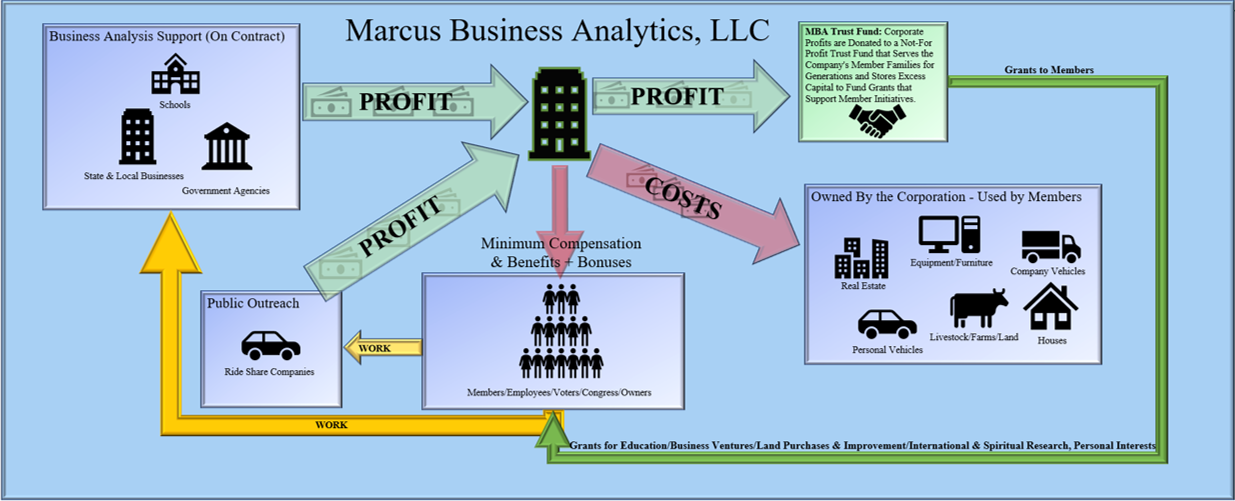
DEFINE BUDGET EXECUTION PROCESS: Every organization, whether government or private sector, has a budget that is executed over a period of time. There is income in either the form of for profit business execution or once it is appropriated by a government entity. Defining the process that manages the execution of the organizations budget, allows a company to put into place a formal process that allows for evaluations of activities executed against expected results of profitability or operational efficiency. Additionally, the budget should correlate proportionally with the mission of an organization.
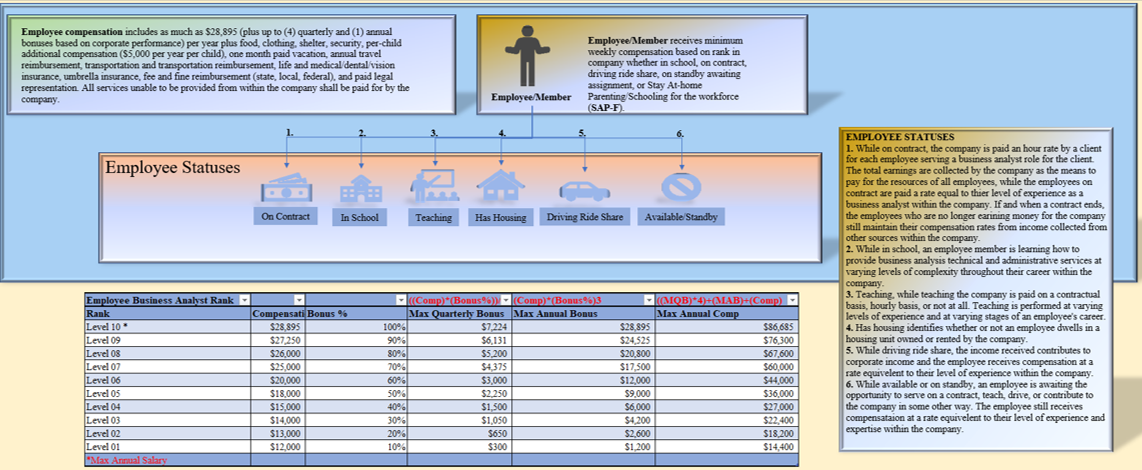
IDENTIFY ORGANIZATIONAL ACTORS: Identify how each person and role (or actor) in your organization impacts the budget, schedule, operations, and how they are utilized across the company. Actor roles and responsibilities as well as operating procedures for each organizational component, documents the as-is state of your organization, making it easier to assist in eliminating operational areas of concern and defining the to-be state.
IDENTIFY RULES OF GOVERNANCE: Identify the rules of engagement between the components of your organization and the rules of all internal and external components that influence the outcomes of the work and responsibilities performed. Operations are usually governed by laws, statutes, and internal policies associated with security, privacy, or finance. Identifying these constraints for every organization allows for them to be mapped directly to processes and actors within an organization.